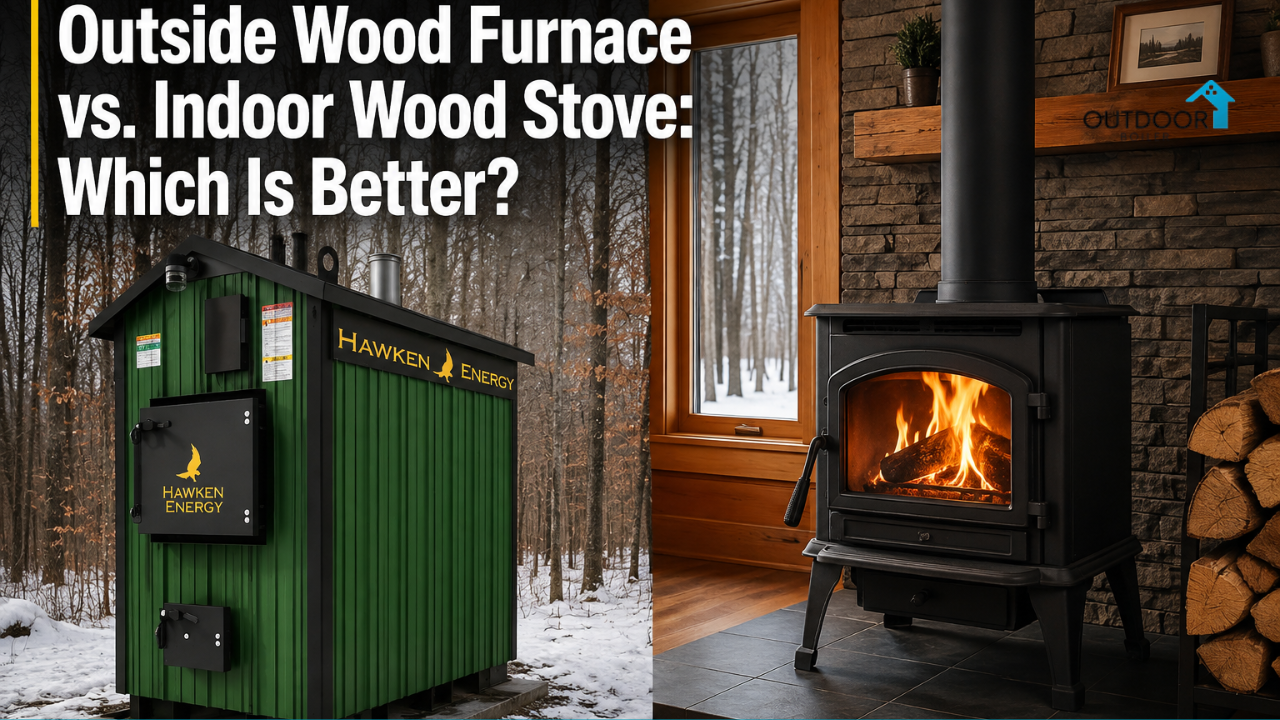
An outside wood furnace is often the better choice for homeowners who want to heat larger spaces while keeping smoke, ash, and fire risks outside the home. An indoor wood stove, on the other hand, is ideal for those looking for an affordable and efficient way to heat a specific room or smaller living area.
Choosing the Right Wood Heating System
Heating with wood has remained a popular option for homeowners who want reliable warmth and greater independence from rising energy costs. Two of the most common choices are the outside wood furnace and the indoor wood stove. While both burn firewood to produce heat, they differ significantly in how they operate, how much they can heat, and the level of maintenance they require.
If you are deciding between these two systems, understanding their differences can help you choose the one that best matches your home, budget, and lifestyle.
What Is an Outside Wood Furnace?
An outside wood furnace is a heating unit installed outside your home, usually several feet away from the main building. The furnace burns wood inside a firebox and heats water that circulates through insulated underground pipes. The heated water transfers warmth into your home’s heating system through a heat exchanger.
Many homeowners also use an outside wood furnace to heat additional buildings such as garages, workshops, greenhouses, or barns. Because the fire stays outside, smoke, ash, and wood debris remain outdoors as well.
What Is an Indoor Wood Stove?
An indoor wood stove is a freestanding heating appliance installed inside the home. It radiates heat directly into the surrounding space and typically connects to a chimney or flue for safe ventilation.
Wood stoves have become much more efficient over the years, with modern models producing more heat while generating fewer emissions than older designs.
Comparing an Outside Wood Furnace and an Indoor Wood Stove
Heating Capacity
One of the biggest differences is the amount of space each system can heat.
An outside wood furnace is designed to heat an entire home and can often provide heat for multiple buildings at the same time.
An indoor wood stove works best for heating one room or a portion of the house. While some larger models can warm multiple rooms, they generally cannot match the whole home coverage of an outside furnace.
Convenience
With an outside wood furnace, you can store larger amounts of firewood near the furnace instead of bringing it indoors every day. This reduces mess inside your home and keeps insects, bark, and dirt outdoors.
Indoor wood stoves require you to carry firewood inside regularly, along with cleaning up ash and wood debris.
Indoor Air Quality
Because combustion happens outside, an outside wood furnace helps keep smoke, dust, and ash away from indoor living spaces.
An indoor wood stove is very safe when properly installed and maintained, but opening the stove to add firewood can occasionally allow small amounts of smoke or ash into the room.
Safety
Keeping the fire outside naturally reduces certain indoor fire risks. There is also less chance of sparks or embers affecting furniture or flooring.
Indoor wood stoves remain safe when installed according to local building codes and manufacturer recommendations. Regular chimney cleaning and inspections are important to reduce the risk of chimney fires.
Installation Costs
An indoor wood stove usually costs less to install. Installation may require a chimney liner or new venting system, but the overall investment is often lower.
An outside wood furnace generally requires a larger upfront investment because of underground insulated piping, water lines, heat exchangers, and site preparation.
Maintenance
Both systems require regular maintenance.
For an outside wood furnace, homeowners typically need to:
- Load firewood regularly
- Remove ash
- Check water levels when applicable
- Inspect underground lines
- Clean heat exchangers
For an indoor wood stove, common maintenance includes:
- Removing ash
- Cleaning the chimney
- Inspecting door seals
- Checking the flue system
Fuel Efficiency
Modern heating equipment has become significantly more efficient than older models.
Many newer outside wood furnaces use advanced combustion technology that burns wood more completely while reducing smoke emissions.
Likewise, newer indoor wood stoves certified by the United States Environmental Protection Agency are designed to burn less wood while producing more usable heat.
The actual efficiency of either system depends on factors such as:
- Proper installation
- Dry, seasoned firewood
- Regular maintenance
- Correct sizing for the home
Environmental Considerations
Burning properly seasoned wood produces fewer emissions than burning wet or freshly cut wood.
The United States Environmental Protection Agency recommends using dry, seasoned firewood and choosing certified wood-burning appliances to improve efficiency and reduce air pollution.
Which System Is Better for Your Home?
The answer depends on your heating needs.
An outside wood furnace may be the better option if you:
- Want to heat an entire home
- Need to heat multiple buildings
- Prefer keeping smoke and wood debris outdoors
- Have enough outdoor space for installation
An indoor wood stove may be the better choice if you:
- Need supplemental heat
- Have a smaller home
- Want lower installation costs
- Enjoy the ambiance of a visible wood fire
Neither option is universally better. The right choice depends on your property, budget, and long-term heating goals.
Other Factors to Consider
Climate
Homes in colder climates often benefit from whole-home heating systems that can maintain consistent temperatures throughout the winter.
Firewood Availability
If you have easy access to affordable firewood, either system can provide economical heating compared to many conventional fuel sources.
Local Regulations
Some communities have regulations regarding wood-burning appliances or outdoor heating equipment. Always check local building codes and environmental regulations before purchasing or installing any heating system.
Final Thoughts
Choosing between an outside wood furnace and an indoor wood stove ultimately comes down to your heating goals, available space, and budget. Both systems offer dependable wood heat when installed correctly and maintained properly. Taking the time to compare heating capacity, efficiency, maintenance requirements, and installation costs will help you make a more informed decision.
If you are exploring wood heating options and want expert guidance tailored to your property, contact our team today. We are happy to answer your questions, explain your options, and help you find the heating solution that best fits your home and lifestyle.